

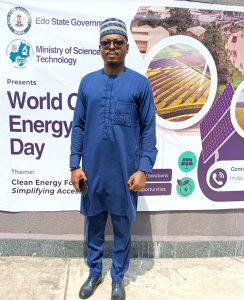
As the world observed World Clean Energy Day, Honorable Colin Tenebe, Senior Special Assistant to the Governor on Climate Change and Green Economy, underscored the strategic importance of renewable energy for Edo State.
Speaking at a stakeholders’ engagement organized by the Ministry of Science and Technology at the Secretariat Complex, Hon. Tenebe stressed that the state must adopt sustainable energy practices to secure long-term economic growth and environmental resilience.
“Everyone involved in renewable energy must ensure their practices are sustainable,” he said, highlighting that clean energy adoption is not just an environmental priority but a necessity to reduce carbon emissions and mitigate the effects of climate change. In his view, the transition to renewable energy requires commitment from every sector, including government agencies, private enterprises, and communities.
World Clean Energy Day provides a critical platform to raise awareness about renewable energy, its benefits, and its potential to drive social and economic transformation.
Hon. Tenebe noted that equitable access to clean energy is essential to bridge the urban-rural energy divide, where reliance on traditional energy methods still limits growth and opportunity. He emphasized that renewable energy can stimulate innovation, create jobs, and strengthen local economies if properly harnessed.
Looking forward, Hon. Tenebe called for strategic planning that incorporates innovative technologies, sustainable policies, and incentives that make renewable energy adoption practical and inclusive. He stressed that Edo State has the potential to become a model for clean energy integration in Nigeria, provided there is collaboration, investment, and public awareness.
The observance of World Clean Energy Day serves as both a reminder and a call to action. For Edo State, renewable energy is not merely an environmental concern, it is a cornerstone for long-term development, social progress, and economic prosperity. By embracing sustainable practices and fostering broad participation across all sectors, the state can reduce environmental impact, bridge energy gaps, and ensure a cleaner, more resilient future for all its citizens.